
Made in America starts with built in America
Made in America starts with built in America
This Fourth of July weekend, the conversation about American manufacturing feels different than it has in a long time. Reshoring announcements are at multi year highs. Federal investment in domestic production has expanded significantly. The phrase Made in America has reentered the mainstream business conversation in a way it had not in decades. And the workforce that will determine whether any of this actually delivers is the part most people are still underestimating.
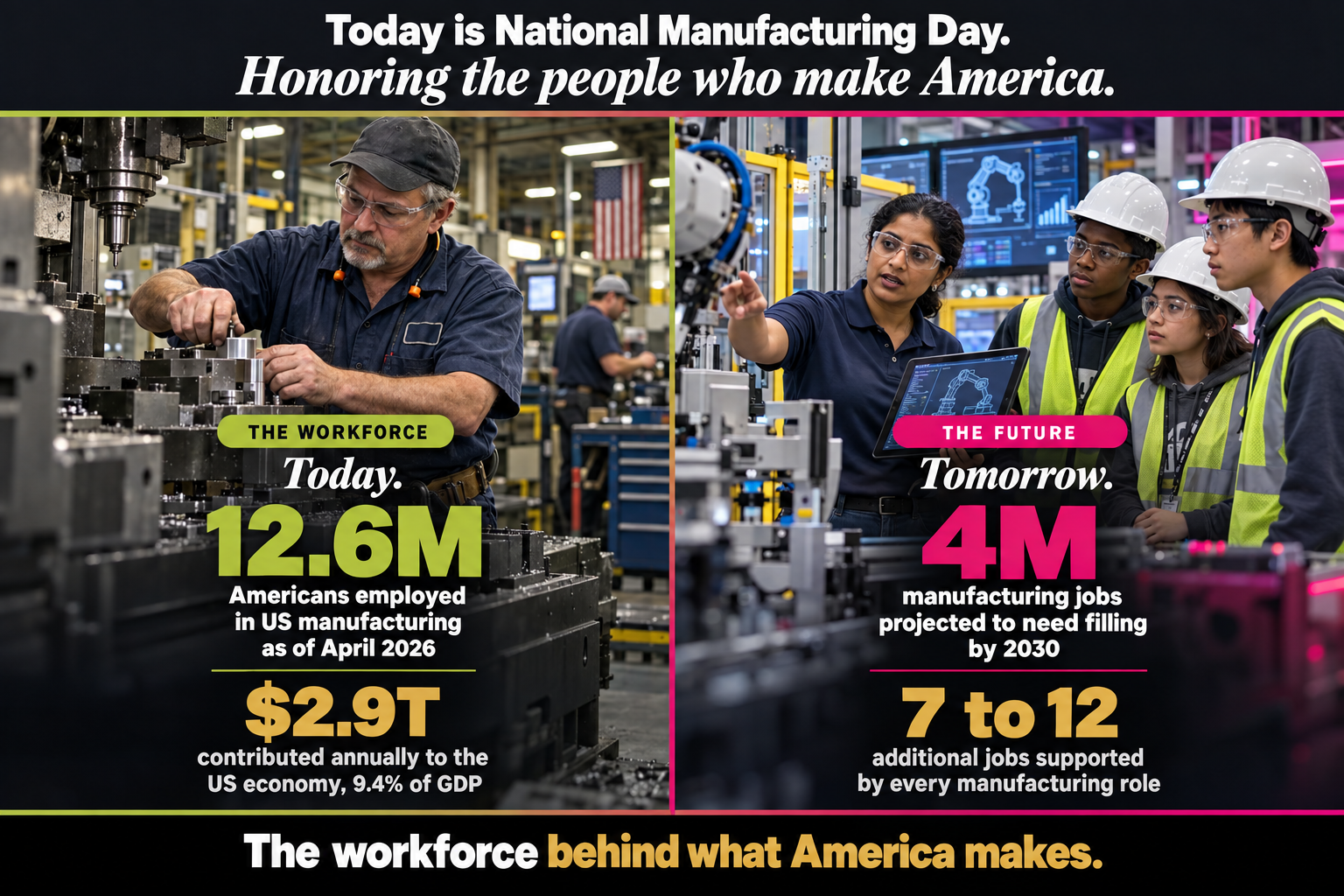
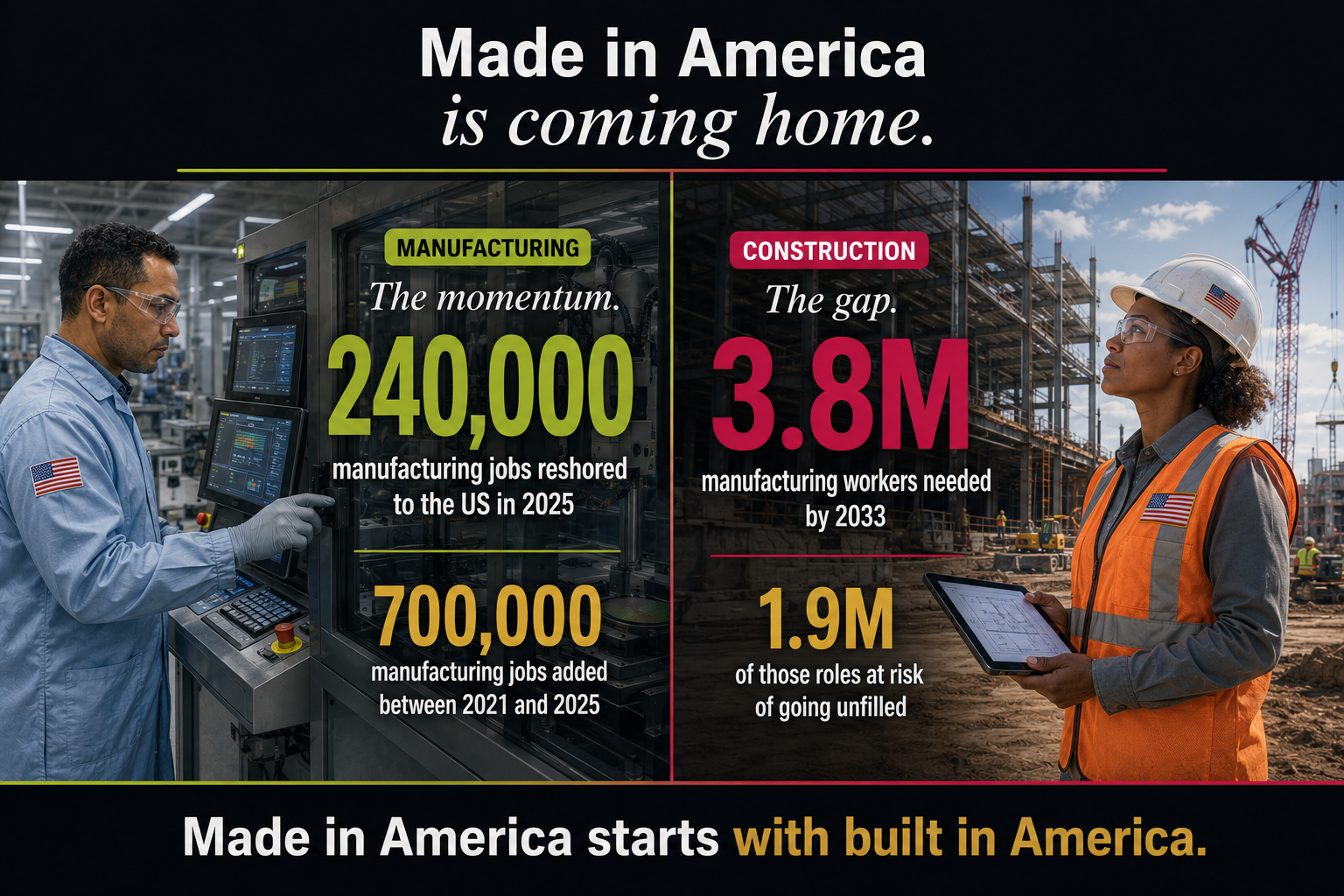
The momentum is real. Between 2021 and 2025, the US manufacturing sector added nearly 700,000 jobs, reaching employment levels not seen since 2008. The Reshoring Initiative projects approximately 240,000 manufacturing jobs were brought back to American soil in 2025 alone. Since 2010, cumulative reshoring and foreign direct investment announcements have exceeded 2 million jobs. The factories are coming home.
The gap is just as real. According to research from Deloitte and the Manufacturing Institute, US manufacturers may need 3.8 million new workers by 2033, with nearly 1.9 million of those roles at risk of going unfilled if current workforce challenges remain unaddressed. In April 2025, there were already approximately 409,000 unfilled manufacturing positions across the country.
And then there is the finding that should reframe how leaders think about the reshoring conversation entirely.
The 2025 USA Reshoring Survey, which polled 500 US manufacturers, asked OEMs what would most cause them to bring more production back to the United States. The results are striking. A stronger skilled workforce would bring back more manufacturing than tariffs, a weaker dollar, lower tax rates, or less regulation. OEMs said they would reshore 30 percent of their products currently manufactured offshore if the skilled labor existed domestically. Tariffs at 15 percent brought back 23 percent. A 15 percent drop in the dollar brought back 21 percent. Corporate tax cuts to 15 percent brought back 18 percent.
Workforce is the bottleneck. Not policy. Not capital. People.
The nature of the work coming back is also different from the assembly line jobs of previous generations. The Reshoring Initiative classified 88 percent of reshored jobs in 2024 as high tech or medium high tech. These are roles in semiconductor production, electric vehicle manufacturing, advanced materials, robotics, and precision machining. Average manufacturing compensation reached $135,525 in 2025, with hourly wages averaging $29.95 by March 2026. The jobs that exist are paying more than they ever have. And they require more training, more credentialing, and more technical depth than ever before.
For manufacturing and construction leaders, the strategic implication is clear. The opportunity in front of American industry right now is real, but the workforce strategy to capture it has to be built deliberately. That means investing in apprenticeship programs at a scale most companies still treat as optional. It means redesigning recruiting to access populations that have historically been overlooked, including women in skilled trades, veterans, and candidates who do not arrive through traditional credential pathways. It means building partnerships with community colleges, trade schools, and regional workforce boards that can train at the speed reshoring requires. And it means redesigning internal practices, from hiring manager training to onboarding to internal mobility, so that the workforce already in place is developed rather than replaced.
There is also a construction side of this story that often gets less attention. Every reshored manufacturing facility starts as a construction project. The same labor shortages limiting manufacturing growth also limit how quickly new facilities can be built. The two industries are connected in the reshoring equation more directly than most workforce conversations acknowledge.
The companies that build deliberate workforce strategies now will be the ones that capture the opportunity. The companies that wait for the workforce to materialize on its own will spend the next decade competing for the talent that did show up, while the rest of their capacity stays unfilled.
At Organa, this is the work we lead alongside our clients. We help organizations align their workforce strategy with the realities of reshoring and domestic expansion, build recruiting practices that access the full skilled labor pool available, and develop the hiring, onboarding, and retention systems that turn manufacturing investment into sustained operational capacity.
This Fourth of July, the American manufacturing story is more hopeful than it has been in a long time. The factories are coming home. The investment is real. The opportunity is significant. The work that follows is just as important.
Made in America starts with built in America.
Sources: Reshoring Initiative 2025 Data Report; Bureau of Labor Statistics Manufacturing Employment Data; Deloitte and Manufacturing Institute Workforce Outlook 2024; 2025 USA Reshoring Survey (500 US manufacturers); IndustryWeek 2025 Salary Survey; Deloitte US Manufacturing Workforce Analysis December 2025