
The Toolbelt Generation is showing up. The industry has to meet them.
The Toolbelt Generation is showing up. The industry has to meet them.
For years, the conversation around Gen Z and the skilled trades has been about whether young workers would return to the fields their parents and grandparents built. That question has been answered.
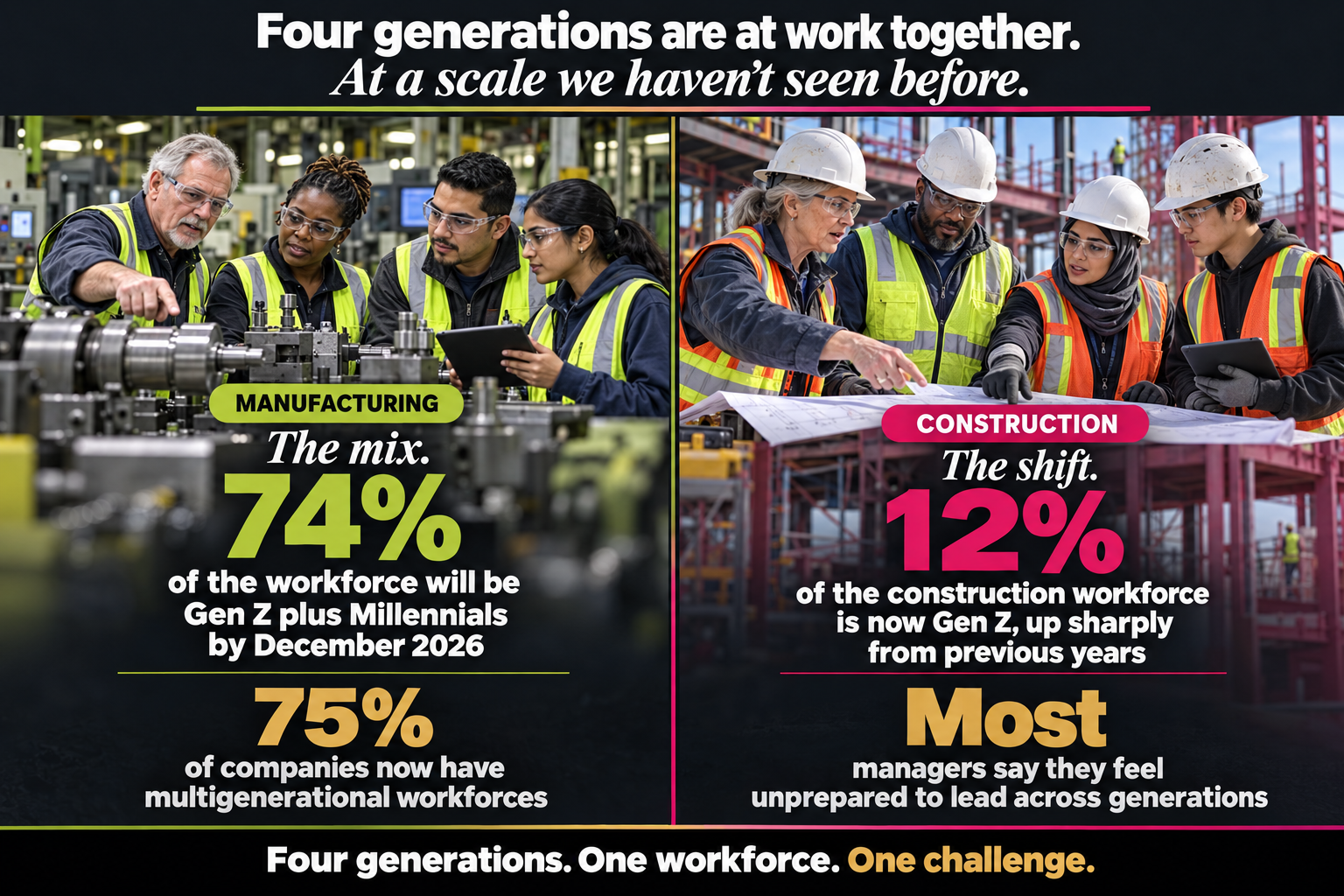
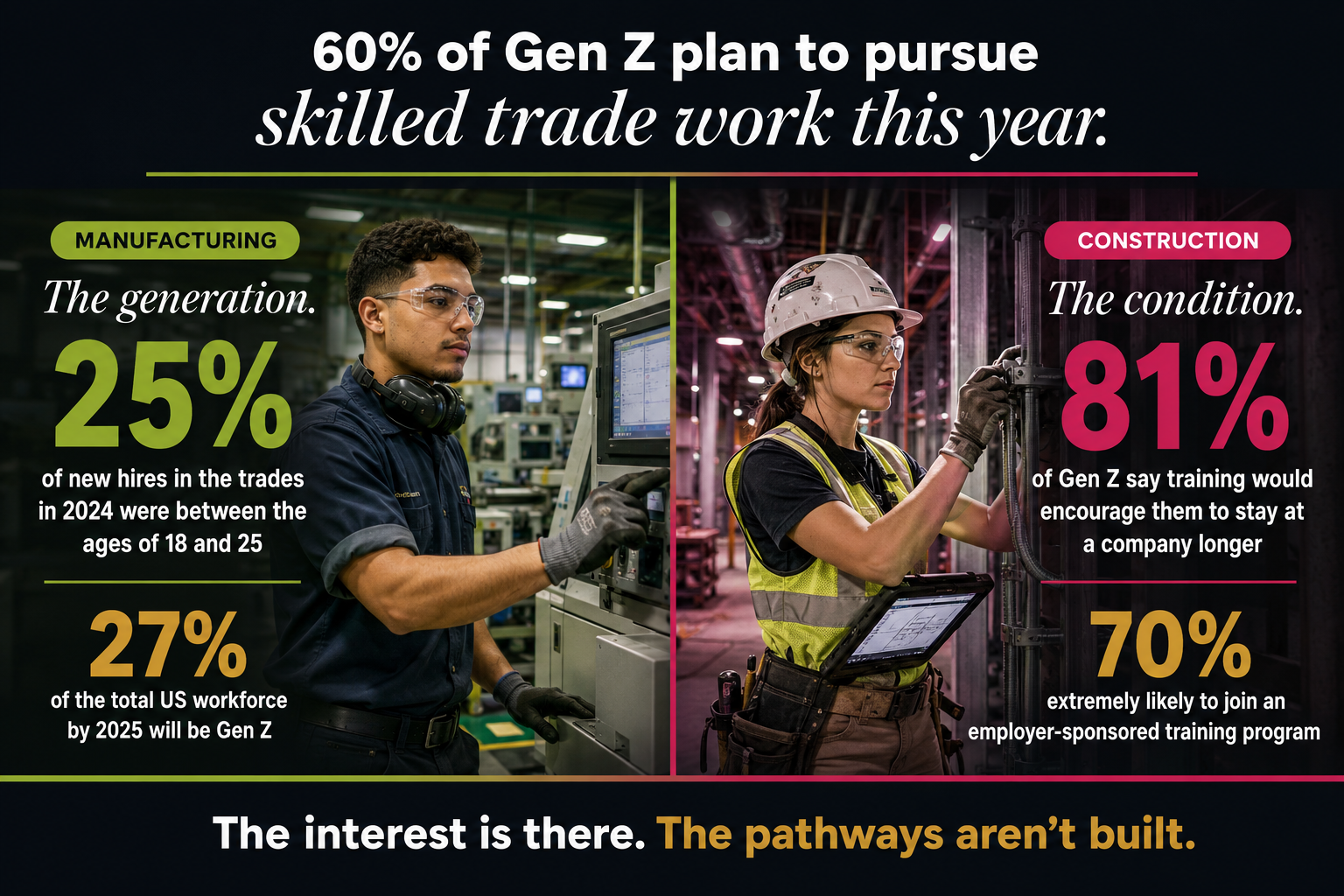
A 2026 Resume Templates survey found that 60 percent of Gen Z respondents plan to pursue skilled trade work this year, a sharp increase from the 38 percent Harris Poll figure recorded in 2024. The Wall Street Journal has dubbed the cohort the Toolbelt Generation. And the data supports the label. In 2024, workers between the ages of 18 and 25 made up nearly 25 percent of all new hires in skilled trade industries, even though Gen Z represented only 18 percent of the total workforce at the time. Gen Z is arriving in the trades in numbers that exceed their share of the labor market.
The reasons are practical rather than symbolic. Gen Z has watched older peers accumulate significant student debt while blue collar workers earned solid livings without loans. They have seen AI disrupt entire categories of white collar work in real time. They have grown up during economic uncertainty, and they are drawn to careers that provide stability, tangible impact, and skills that resist automation. According to Thumbtack research, 55 percent of Gen Z now consider a skilled trade career, and that figure rises to 72 percent among those who already hold college degrees.
The financial motivation is real, but it is not the only motivation. When McKinsey surveyed Gen Z manufacturing workers, they found priorities that diverge sharply from those of older generations. Where Boomers rank compensation as their top job factor, Gen Z places compensation sixth. Instead, Gen Z prioritizes psychological safety and respect, meaningful work, and clear development opportunities. This is not a generation trading in ambition for a paycheck. It is a generation looking for work that is stable, respected, and worth doing.
The strategic implication for manufacturing and construction leaders is significant, and it is not the same implication most companies were preparing for.
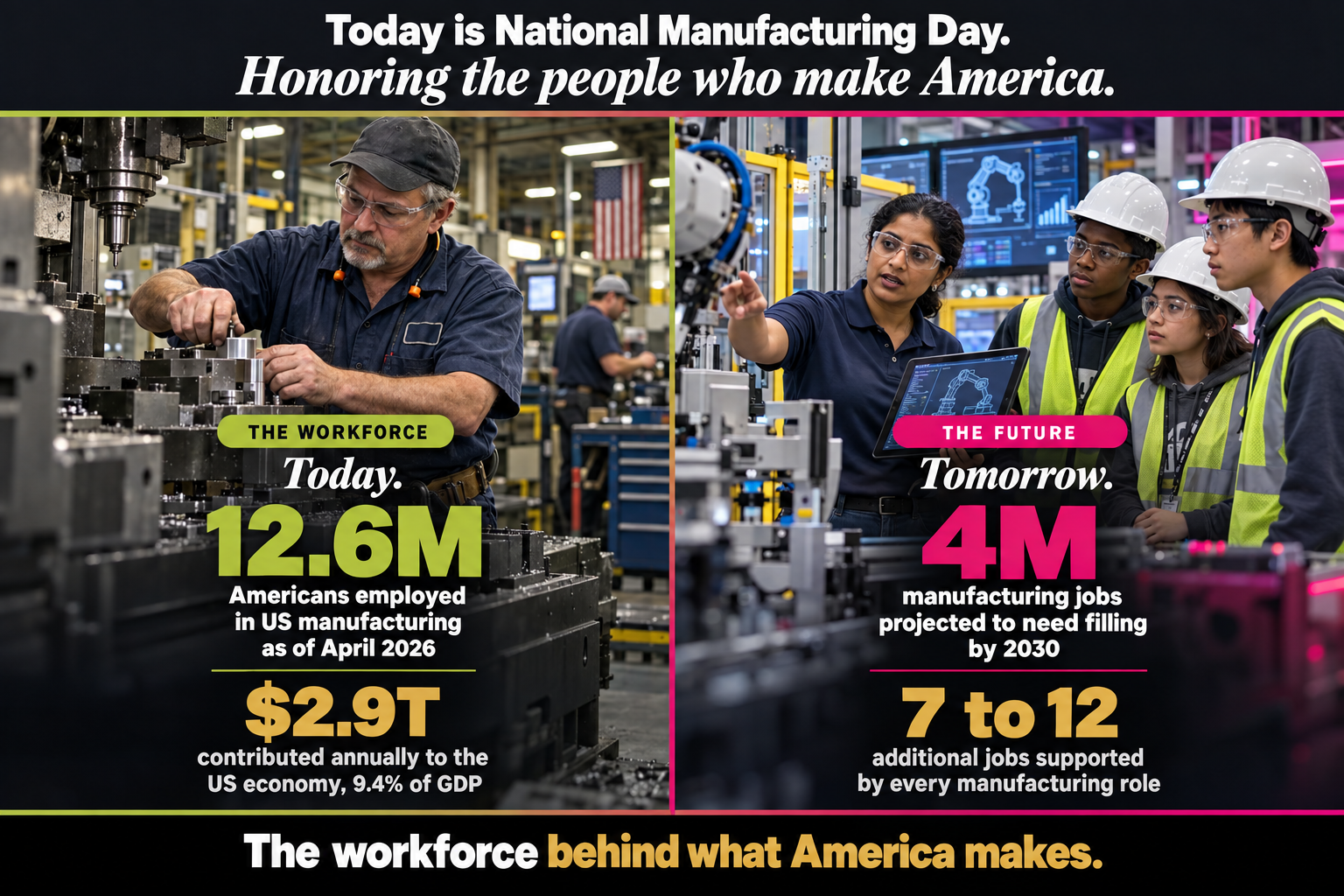
For years, the workforce conversation has focused on the awareness gap. How do we let young people know these careers exist? How do we make the trades feel accessible? Those questions still matter, but they are no longer the central question. Gen Z knows the trades exist. Gen Z is showing up. The question now is whether the industry is built to receive them.
The data suggests the answer, in many cases, is no. According to the Ready to Hire 2025 survey, 70 percent of Gen Z workers considering skilled trades would be extremely likely to join an employer sponsored training program that led directly to employment. 81 percent say training would encourage them to stay at a company longer. 85 percent would definitely pursue skilled trade careers if financial support for training were guaranteed. And 62 percent begin planning their career path while still in high school. These are not passive preferences. They are the terms of engagement.
The organizations that will win the Toolbelt Generation are the ones that build around what this generation is actually asking for. Paid apprenticeship programs at wages competitive with entry level retail and food service, so that a first year apprentice is not choosing between the trades and a job at McDonalds. Formal partnerships with high schools, community colleges, and technical schools that create direct pipelines from education to employment. Structured onboarding that treats new hires as investments rather than expenses. Management practices that reflect Gen Z priorities of respect, safety, and development, not the outdated culture that made blue collar work feel undesirable to a previous generation. And clear career pathways that show a 22 year old apprentice how they get to journeyman, foreman, superintendent, or business owner.
None of this is complicated. Most of it is well documented in retention research. And most of it does not require significantly more spending, just more deliberate design.
There is also a broader signal worth naming. If Gen Z is choosing the trades in these numbers, and the industries that receive them are not modernizing their workforce practices at the same pace, the risk is not that Gen Z will not show up. The risk is that they will show up, be underserved, and leave. Early attrition in the trades has increased in recent years across nearly every measurement. A generation that came in with strong intent will not stay if the receiving experience does not match.
At Organa, this is the work we lead alongside our clients. We help organizations build recruiting strategies that connect with Gen Z where they actually are, design apprenticeship and training programs that hold up to what this generation is looking for, and align hiring and management practices with the workforce showing up today, not the workforce that came before.
The Toolbelt Generation is showing up. The industry has to meet them.
Sources: Resume Templates 2026 Skilled Trades Survey (1,250 Gen Z respondents); Gusto Trade Industry Hiring Analysis 2024; Ready to Hire 2025 Gen Z in the Skilled Workforce Report; Thumbtack Future of Skilled Trades Report; McKinsey Gen Z Manufacturing Workforce Survey; Harris Poll Skilled Trades Awareness; Bureau of Labor Statistics Workforce Composition Data