
Your overtime report already knows what it’s costing you.

The Two Numbers Nobody Puts Side by Side | Caroline Burgreen, President & CEO

I've spent more than fifteen years in recruiting and staffing, and I've sat in a lot of plant conference rooms. There's one moment I see play out repeatedly. Someone from HR mentions the maintenance tech role that's been open for seven months. A little later, someone from finance brings up the maintenance overtime number, and it isn't pretty. Nobody connects the two.
But guess what? They're the same problem wearing two different hats.
Here's how it usually happens. A maintenance role opens up and the job description gets pulled out and shared with the team. Everyone adds the skill they wish the last person had. By the time the job gets posted, it's asking for a PLC programmer, a robotics tech, a millwright, a certified welder, and a high voltage electrician, all in one person, with a pay range that fits maybe one of those jobs. Then everyone waits for that candidate to show up.
The waiting isn't free. The machines don't know there's an open req. Someone still has to answer the 2 AM call on a Sunday, and it's almost always the same few people. Your best techs. The ones who know every quirk of line three and never complain. They pick up one weekend, then the next, and before long overtime isn't covering a gap anymore. It's just how the plant runs.
I learned what that costs the hard way, just not in a plant. Last year I was running the longest distances I'd ever run at the quickest pace I'd ever held. Week after week I kept pushing my total mileage higher, but I wasn't giving my body enough time to recover. After a big weekend of long runs, I set out on a Monday for my normal 10k. About four miles in, my knee started hurting. I was determined to keep my pace and get my miles in, so I kept going. Big mistake. What might have cost me a few days ended up costing me almost three months, and I had to completely restart my training.
That's what chronic overtime does to a maintenance team. Every extra weekend feels like progress, like you're getting by until the right hire comes along. But people aren't equipment you can run past their limits without paying for it later, and the bill usually comes due at the worst possible time. For a plant, that's the day one of your seasoned techs walks into the plant manager's office and hands over their badge. It's rarely about the money. It's about the ball games and anniversaries they missed while they were holding the place together. And now you have two open reqs instead of one.
So if you have a maintenance opening that's been sitting longer than you'd like to admit, I'd gently push you to look at your overtime report before you look at your job board. The answer might already be sitting there.
The Unicorn and the Time Clock
Why the perfect maintenance hire is costing you more than you think
Most plants track hiring and overtime in separate reports owned by separate teams. HR watches time to fill. Finance watches labor variance. Put the two side by side, though, and a pattern shows up quickly: the longer a maintenance req stays open, the higher the overtime climbs. More often than not, the cause starts with the job description itself.
The Anatomy of the Unicorn Requisition
Look closely at a typical maintenance posting today and it reads less like a job description and more like the combined resume of an entire department. Five or more years of Allen Bradley PLC troubleshooting. Robotics programming and vision system calibration. Precision rebuilds on pumps, gearboxes, and pneumatics. Certified stick and TIG welding. 480V three phase power distribution and arc flash compliance. The target pay is somewhere around $32 to $36 an hour.
The technician who has real mastery across all five of those disciplines is rare. When they do exist, they're usually running their own contracting business, working for an OEM at $65 or more an hour plus per diem, or firmly settled at a plant that treats them well. Yet reqs like this sit open for six, nine, even twelve months while everyone waits for the one candidate who checks every box.
Ghost Headcount
While the req sits open, equipment still breaks, PM work orders still pile up, and emergency changeovers still happen in the middle of the night. The only lever available right away is overtime, so that's the one that gets pulled.
What starts as a short bridge quietly becomes the operating model. Senior techs log 55 to 65 hours a week. Shift leads cover weekends on their scheduled days off. The plant ends up buying the output of one and a half people from one tired person, at time and a half or double time. Finance may even see it as a savings since there's no added benefits package and no recruiting fee. That math leaves out almost everything that matters.
What Chronic Overtime Really Costs
Safety and scrap. A large U.S. study found that jobs with overtime schedules carried a 61% higher injury rate than jobs without, even after accounting for industry and occupation. In a plant, fatigue shows up as a missed alignment tolerance, a stripped shaft, or a miswired interlock. One unforced machine crash can cost more than a year of recruiting.
Disappearing PM. Exhausted teams don't do precision maintenance. They fight fires. Air leaks get patched, sensors get bypassed to make it to shift change, and lube routes get pushed. The equipment eventually fails harder, which creates even more overtime.
Pay inflation without loyalty. When a technician gets used to an extra $20,000 to $40,000 a year in overtime, their household budget adjusts. The moment you try to bring hours back to normal, it feels like a pay cut, and they go find another plant offering more hours. You end up keeping people with overtime, not with culture or career growth.
Losing your anchors. The people covering the gap are usually your most loyal, most experienced techs. When one of them finally walks, the years of tribal knowledge they carried about your equipment walk out with them, and no new hire brings that back on day one.
Breaking the Cycle
If your plant is carrying heavy overtime while maintenance seats sit open for months, the issue usually isn't sourcing. It's how the work is designed. A few shifts in thinking make a real difference.
Unbundle the role. Stop asking one person to do the work of three crafts. Separate mechanical work like PMs, lubrication, drives, and hydraulic rebuilds from controls, automation, and PLC work. Mechanical talent is far easier to find and ramps up quickly, and once you stop requiring it to also write ladder logic, your candidate pool opens up dramatically.
Treat overtime as a warning light. Sustained overtime isn't a measure of dedication. It's a signal that something in your staffing model is broken. Look at the true cost: overtime wages, scrap during overtime shifts, safety incidents, and expedited freight from deferred maintenance. Chronic overtime is almost always the most expensive way to run a facility.
Bring in specialized talent for the peaks. You probably don't need a full time automation specialist on site 52 weeks a year. You need that skill set during commissioning, major overhauls, or while your own team is being upskilled. Contract technical talent can stop the overtime bleed for your core crew right away and give you room to hire deliberately instead of desperately.
The Takeaway
Every week a unicorn req stays open isn't money saved. It's unbudgeted overtime, deferred maintenance, and fatigue piling up on the people who keep your plant running.
This is also where an outside perspective can earn its keep. When a job description has been passed around the same team for months, it's hard for anyone on the inside to tell which requirements are essential and which are wishes. A good recruiting partner lives in the market every day. They know what the skills you need actually pay, which combinations of skills really exist in the candidate pool, and where the people you want are working right now. They can push back on a requirement without the internal politics, and bring in contract technical talent quickly enough to take pressure off your core crew while the permanent hire gets done the right way.
The goal isn't to lower the bar. It's to set it where the market actually is, protect your bench, and build the capability you need for next year without wearing out the team you have today.
Where we see this outside of work | Kelly Gerritse, Chief Operating Officer
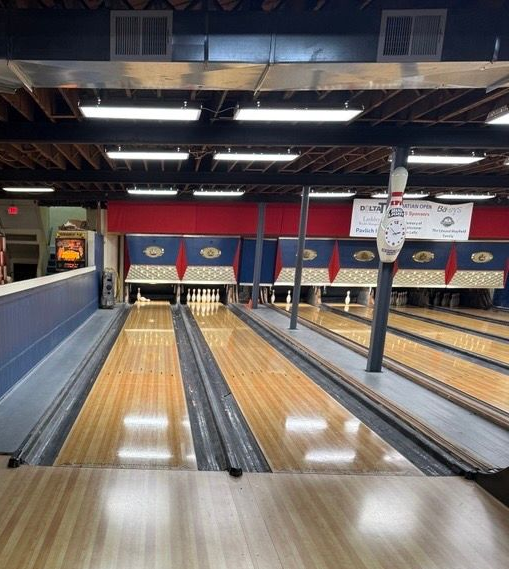
I bowl in a league on (shout out to my bowling ladies!), and every season we live out this exact problem.
When one of us can't make it, we don't get to skip her turn. The team bowls her blind score: her average, minus a penalty. We start the night down pins before anyone even picks up a ball. And if we want to win, the rest of us have to bowl above our averages to make up the difference.
One night of that? We can pull it off. Somebody throws a couple of extra strikes, we pick up our spares, and we get it done. But if that lane stays empty week after week, it catches up with you. Arms get tired. You start forcing shots. The strongest bowler on the team ends up carrying everyone in the 10th frame, and eventually even she runs out of gas.
That's what I see every time I walk into a plant with a maintenance role that's been open for 200+ days. The crew is bowling with a blind every single shift. The techs who show up are expected to outperform, every week, on overtime. And the one tech who can fix anything is the anchor getting the Saturday call every time.
Here's the thing bowling leagues figured out a long time ago: nobody leaves a lane empty waiting for a rockstar bowler to walk in. You bring in the bowler who averages 130, give her a handicap, and watch her get better all season. A developing bowler beats a blind score every time.
Plants don't need a unicorn. They need to stop bowling short.