
You Hired the Right Person

You hired exactly who you asked for. So why does this keep happening? | Caroline Burgreen, President & CEO

A few weeks ago, I was on a call with the leadership team at a mid sized manufacturer. They'd been searching for a plant operations leader for close to five months and were starting to question whether the right person even existed in the market. By the time we connected, they'd seen plenty of candidates. None had cleared the bar. And as we talked through it, something else came into view: this was the second time in 18 months they'd opened this same seat, and each time, the role had been redefined a little differently than the last. More scope here. A different reporting line there. New expectations bolted on after the previous hire didn't work out.
We worked through feedback on the most recent slate of candidates, the ones we'd submitted after our previous conversation, and I could tell we were about to land in the same place again. So I paused and asked, "Can we take a step back for a minute? I'm starting to think there's a different conversation we need to have first."
And here's what I want to be careful to say: it wasn't their fault. This wasn't a hiring team that didn't care or didn't understand the stakes. They knew exactly what this role was costing them every month it stayed open. They wanted to get it right. They were focused on the wrong thing, which is a different problem than not being focused at all. And it's a problem I see good leaders run into more often than people talk about.
What strikes me about these conversations isn't the frustration. It's what gets blamed for it. The focus almost always lands on the candidate. Wrong background. Not the right culture fit. Good on paper but not quite right in practice. And while that may be true in isolated cases, when I hear it consistently, I start asking a different question.
If the same role keeps cycling through people, at what point do we stop looking at the candidates and start looking at the role?
When a search becomes slow, circling, and difficult to close, it is rarely a talent shortage. In most cases, it's a signal that the role itself hasn't been clearly enough defined to evaluate candidates against.
This shows up in a few ways. Sometimes it's a misaligned hire. The person was technically qualified, but placed into a role that didn't reflect what the business actually needed, because the role was defined around what the last person did rather than what the work genuinely requires today. Sometimes it's an expectation gap. The hiring manager, the team, and the candidate each carried a slightly different picture of the role into the first week, and those pictures were never reconciled before the search closed. And sometimes it's a search that simply won't land. Five candidates have come through, no one has cleared the bar, and the goalposts have quietly shifted at least twice without anyone naming it out loud.
I've been on the other side of this myself. A peer of mine was hiring for a support role, the kind of position that touches multiple departments and ends up working with a lot of different people. Several of us participated in the interview process, including me. And what I realized afterward was that each of us walked into those interviews looking for what we individually needed from the role. None of us were really asking what the organization needed from it. We weren't aligned, we just thought we were.
That's the piece I keep coming back to. The misalignment was ours, not the candidate's, and we didn't see it until later.
These feel like three separate problems. In our experience, they almost always share the same root. The role was not designed with enough precision before the search began. And without that foundation, even a strong recruiter working a deep market will struggle to deliver a hire that sticks.
The organizations we see navigating this well aren't necessarily faster or more resourced. They're more deliberate before anything goes to market. They spend time aligning internally on what success looks like in the role at 30, 90, and 180 days. They separate what the role genuinely requires from the wish list that has accumulated over time. They ask honestly whether they're trying to fill one role or quietly asking one person to carry what has become two jobs. And they make sure the person accepting the offer understands not just the upside, but the friction they're stepping into.
That level of deliberateness doesn't happen by accident. It requires someone to slow the process down before the urgency of a vacancy takes over. It requires the right questions to be asked before the job description gets written. And in many cases, it requires an outside perspective, because it's genuinely difficult to see the design problem clearly from inside it.
That's a significant part of the work we're building toward at Organa. Not just helping organizations find the right people, but helping them get clear on what the right role actually looks like before the search begins. More on that in the coming months.
If you've refilled the same seat more than once, what did you change about the role before the next search?
What to Do Before you Start the Search This pause will pay off.
When a role opens, especially unexpectedly, the instinct is to move fast. Post the job, engage a recruiter, start reviewing resumes. Speed feels like progress. But the searches that take the longest are almost always the ones that started the fastest, before anyone had really agreed on what the role needs to accomplish.
A short pause before the search opens isn't a delay. It's the work that makes everything after it move with more focus. Here are the questions I'd encourage you to sit with before the next req goes live.
About the role itself. Is this position defined around what the last person did, or around what the business genuinely needs today? Can you describe what success looks like at 30, 90, and 180 days in specific, measurable terms? And do the hiring manager, the direct supervisor, and HR all share that definition, or is each of them carrying a slightly different version of it?
About expectations. What does a candidate hear about this role during the interview process, and does it match what they'll actually experience once they're in it? Are you communicating the real challenges (the friction, the constraints, the pace) alongside the opportunity? Candidates who walk in with an honest picture of what they're stepping into tend to stay significantly longer than those who discover it on their own.
About search momentum. If the search has been open for several months and no one has cleared the bar, the honest question isn't where to find more candidates. It's whether the criteria are clear and agreed on internally. How many stakeholders have meaningful input into this hire, and are they actually aligned? And is the real cost of this role staying open visible to everyone involved in the decision, or is the urgency being absorbed quietly by the team carrying the work in the meantime?
None of these questions have easy answers. But the act of asking them, before the process is already in motion, tends to produce searches that move with more focus, close with more confidence, and result in hires that actually hold.
Where I See this Outside of Work | Kelly Gerritse, Chief Operating Officer
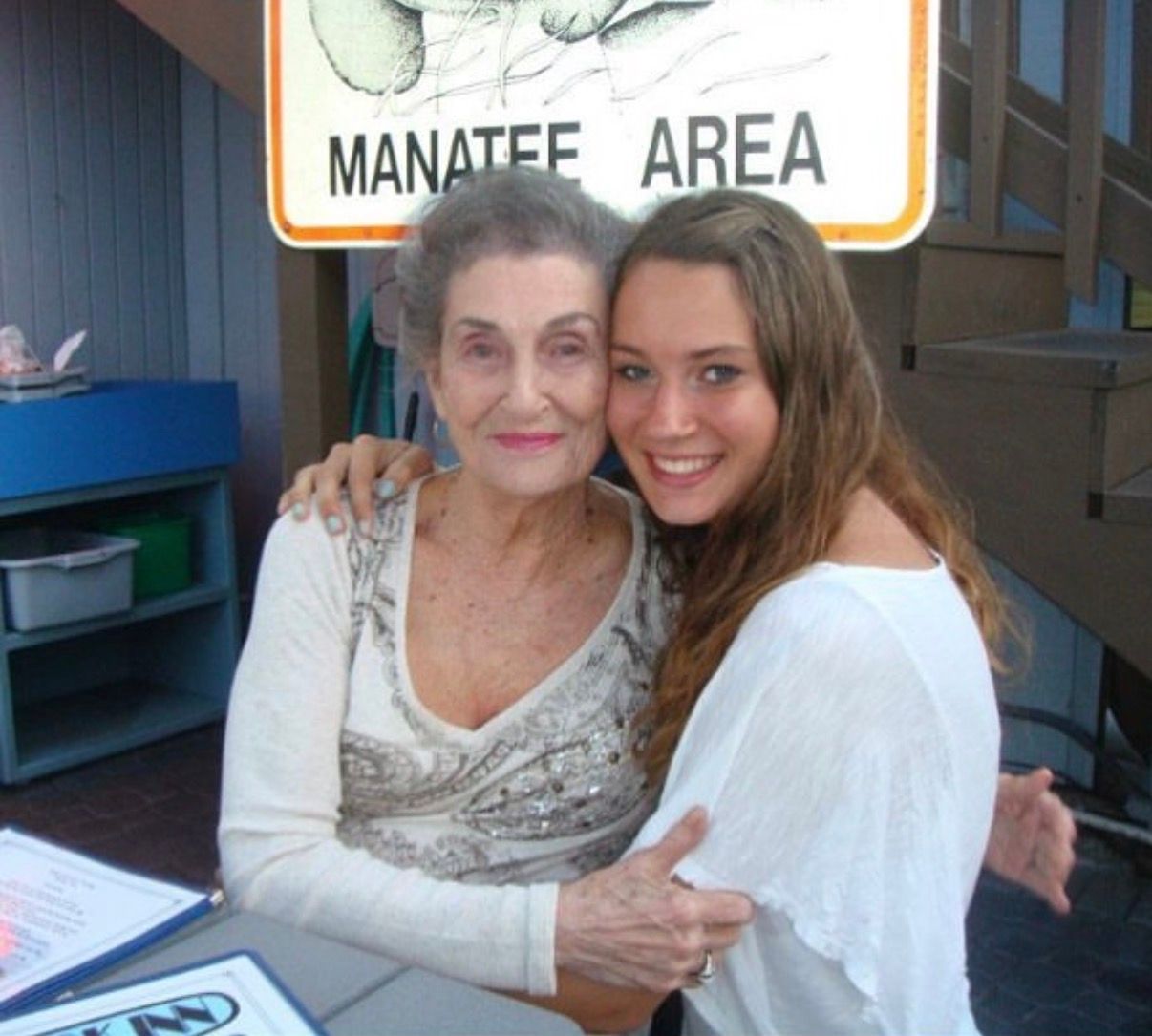
My grandma was an incredible cook. She had seven kids, so she had to be creative it wasn't optional, it was survival. Growing up, Wednesday nights at her house were a standing tradition. My mom worked late on Wednesdays, so my grandparents would watch us, and those evenings became something I looked forward to every single week.
One of the things I loved most was that on your birthday, you got to pick what she made. Every year, without hesitation, mine was spaghetti red. It was not traditional spaghetti. You would not find it in any cookbook. It was entirely hers. Built from years of feel, intuition, and a kitchen she knew by heart. And it was perfect every single time.
As I got older, I knew I had to figure out how to make it. So one day I just asked her. And of course, she had no recipe. She did not need one. She just knew. What I got instead were moments like “you need a little more chili powder,” or “you used too many noodles”. Directionally helpful. But not a recipe.
I kept trying anyway. I failed a lot. I asked for a crockpot on my wedding registry specifically so I could keep practicing. I made adjustments, paid attention to what was off, tried again. I honestly could not tell you exactly what I do now but at some point something clicked, and I cracked the code. It is my kids' favorite meal. Every time I make it I think of her, and the fact that my kids love it as much as I did means everything to me.
But here is what stays with me about that whole process. My grandmother was not withholding the recipe. She genuinely did not have one to give. The knowledge lived entirely in her. It lived in her instincts, her adjustments, her decades of feel. When she was no longer the one cooking it, that knowledge did not automatically transfer. It took someone being willing to iterate, to ask questions, to fail repeatedly, and to keep going until something that had only ever existed in one person's hands could finally live somewhere else.
I think about that a lot in the context of what Caroline shared this month. So much of what makes experienced people irreplaceable is not in their job description. It is not documented anywhere. It lives in their judgment, their relationships, the way they read a situation and adjust without being asked. And when they leave, organizations are often standing exactly where I stood in that kitchen they are holding a general idea of what the dish is supposed to taste like, without a real recipe to follow.
The ones that come out the other side are not the ones who found someone who already knew how to make it. They are the ones willing to ask the right questions, make adjustments, pay attention to what is off, and keep going until they build something that holds. It rarely looks exactly like what came before. But when it works it becomes something worth passing down all over again.