Turnover is usually framed as a retention problem. The exit interview happens. The data gets analyzed. The conclusions point to engagement, recognition, compensation, or career development. All of that is real. And all of it tends to look at the issue from the wrong end of the timeline.
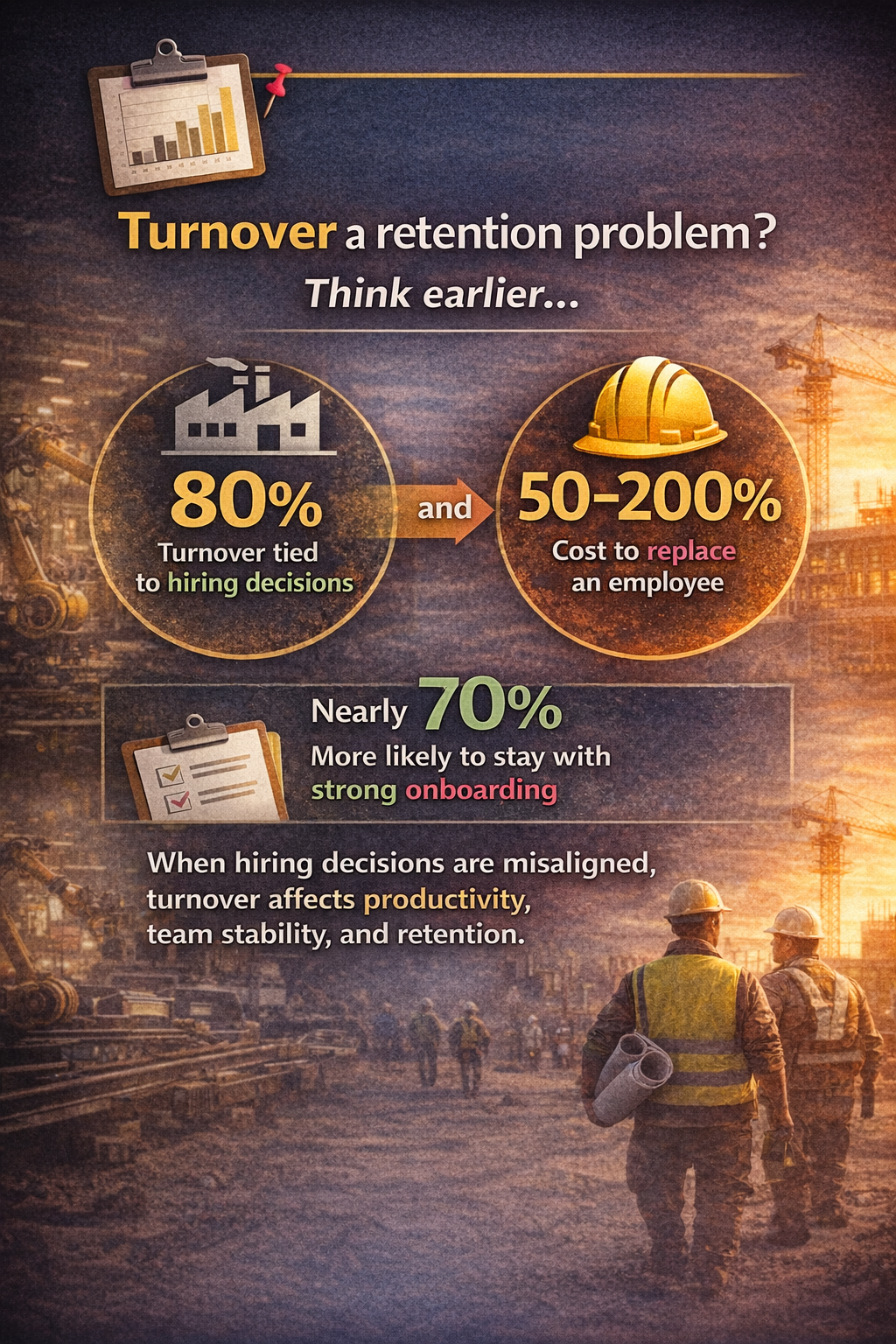
Up to 80 percent of employee turnover is influenced by hiring decisions and role fit. The cost of replacing an employee can range from 50 percent to 200 percent of their annual salary. Nearly 70 percent of employees say they are more likely to stay with a company that provides a strong onboarding experience.
In other words, much of the turnover an organization experiences this year was set in motion months or years earlier, in how those people were hired and integrated.
Different industries. Same reality.
When hiring decisions are misaligned, the impact does not stay contained to the role. It shows up later in retention. In team performance. In the slow erosion of culture as good people watch the wrong people fail in roles they should not have been hired into.
That is not a retention problem. It is a hiring problem appearing at a later date.
Preparing a future ready workforce means looking at turnover through a different lens. Not asking only why people are leaving, but asking how they were hired, how their roles were defined, and how their first 90 days were structured.
The organizations that have reduced turnover meaningfully tend to have done it not by adding retention programs, but by tightening the front end. They have gotten clearer on what excellent looks like in a role before they hire. They have made sure interview teams are evaluating the right things. They have built onboarding experiences that turn the first weeks into a foundation rather than a scramble.
When the front end works, the back end pressure eases. Engagement improves not because of an initiative, but because the right people are in the right roles doing work they are suited for.
At Organa, we work with organizations to strengthen the hiring foundations that drive long term workforce stability. Because the most effective retention strategy is hiring well in the first place.
Sources: Gallup; SHRM; Deloitte; Associated General Contractors of America; Glassdoor